

What is Telecom? A Beginner’s Guide
- Categories Basic Telecom
- Date August 24, 2025
- Comments 4 comments
You Must Know What is Telecom?
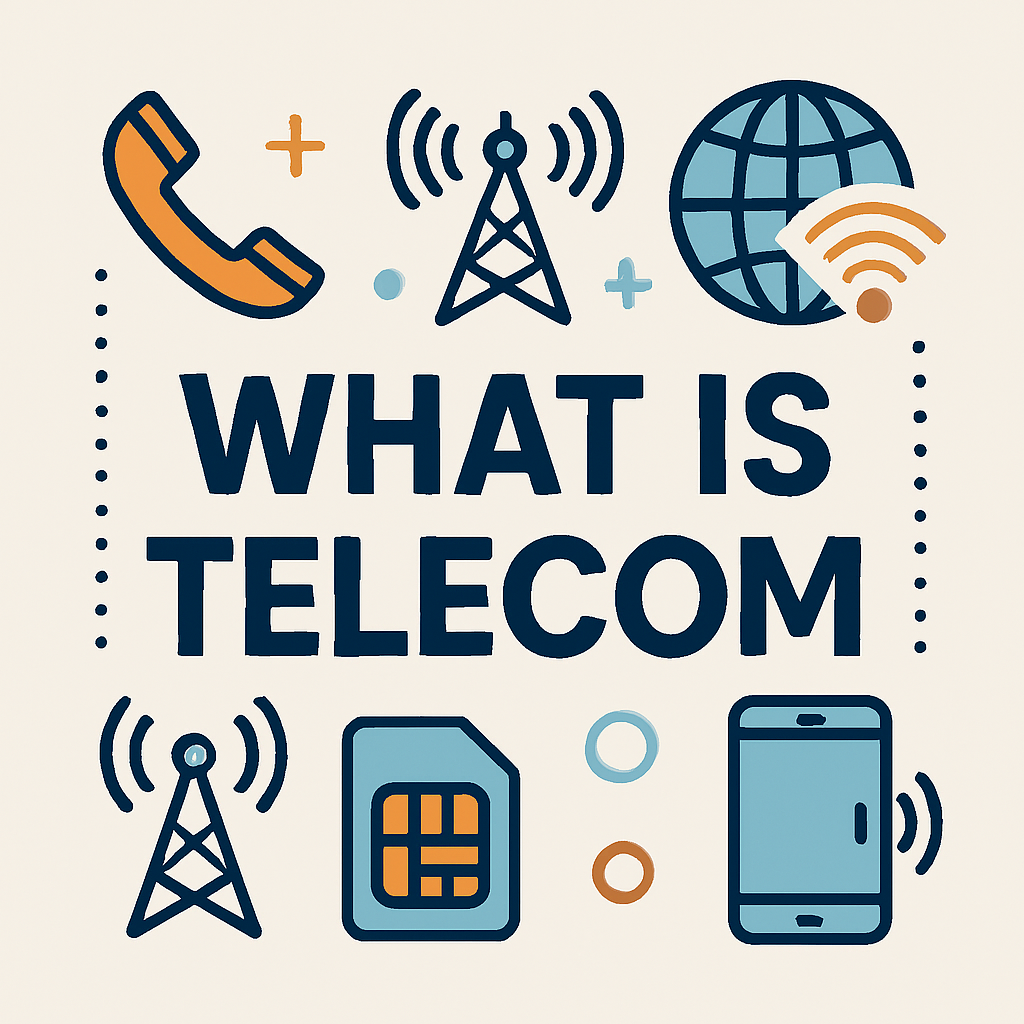
Short for telecommunications, telecom is the backbone of modern communication system. You Must Know What is Telecom ,From making a phone call to watching a YouTube video or sending an email — all of it happens thanks to telecom networks.
Telecom connects people, businesses, and systems across cities, countries, and continents. It enables global communication, drives the digital economy, and powers technologies like 5G, satellite internet, and smart devices. that’s why you must know what is telecom
Before You Must Know What is Telecom, you should know why Whether you’re a student exploring new career options, a job seeker looking to enter the field, or someone simply curious about What is Telecom? — this beginner guide will help you understand what telecom is, how it works, and what exciting opportunities it offers.
What is Telecom?
Telecom refers to the electronic transmission of information over distance. This includes:
-
Voice (phone calls)
-
Data (emails, browsing)
-
Video (video calls, streaming)
-
Text (SMS, messaging apps)
These are sent through various mediums such as:
-
Copper wires
-
Fiber optic cables
-
Microwave and satellite signals
In short, telecom is all about transferring information from one place to another using technology.
A Brief History of Telecom
Let’s take a quick look at how telecom has evolved over time You Must Know What is Telecom and where it start :
19th Century
-
1830s: The telegraph allowed messages to be sent using Morse code over wires.
-
1876: Alexander Graham Bell invented the telephone, allowing real-time voice communication.
20th Century
-
1900s: The introduction of radio and television revolutionized mass communication.
-
1960s: Satellites enabled long-distance and international broadcasts.
-
1990s: The internet brought in a new age of digital communication.
21st Century
-
Smartphones, broadband, fiber optics, and 5G networks have made communication faster, cheaper, and more mobile than ever before.
How Telecom Works: The Basic Components
A telecom system typically includes three main parts:
-
Transmitter – Converts information (like your voice) into signals.
-
Transmission Medium – Carries these signals. This could be a fiber optic cable, copper wire, or wireless signal.
-
Receiver – Converts signals back into usable information.
Example:
When you send a WhatsApp voice message then You Must Know What internal process of telecom :
-
Your phone records and converts your voice into digital signals.
-
These signals are transmitted over the internet or mobile network.
-
The receiver’s phone converts the digital signals back into your voice.
This entire process happens in seconds, across thousands of kilometers You Must Know What is Telecom? Ultimate Beginner’s Guide
What Does a Telecom Engineer Do?
A telecom engineer plays a crucial role in building and maintaining the systems that allow communication to happen. Their responsibilities include:
-
Designing and installing network infrastructure
-
Setting up mobile towers, antennas, and fiber optic lines
-
Managing 4G/5G services and internet connectivity
-
Troubleshooting network problems and minimizing downtime
-
Ensuring network security and data protection
-
Collaborating with IT teams, software engineers, and vendors
Telecom engineers may work in the field, in offices, or on large infrastructure projects for private companies, governments, or telecom service providers. You Must Know What is Telecom and how stake in government and Private sector
Career Opportunities in Telecom
Telecom is one of the fastest-growing sectors globally, offering career options for both beginners and experienced professionals. Common job roles include:
-
Telecom Engineer
-
Network Engineer
-
RF (Radio Frequency) Engineer
-
Transmission Engineer
-
Core Network Engineer
-
Fiber Optic Technician
-
Field Technician
-
Telecom Project Manager
-
NOC (Network Operations Center) Engineer
-
Drive Test Engineer
These roles exist in mobile operators (like Jio, Airtel, Vodafone), ISPs (Internet Service Providers), network vendors (like Nokia, Ericsson, Huawei), and global tech companies. You Must Know What is Telecom, and witch company Working on Telecom
Skills Required to Build a Career in Telecom
To become a successful telecom professional, you should develop a mix of technical and soft skills:
Educational Background:
-
Diploma or degree in Electronics, Telecommunication, Computer Science, or Electrical Engineering
Technical Skills:
-
Knowledge of networking concepts (IP, TCP/IP, DNS, DHCP)
-
Certifications like CCNA, CCNP, or CompTIA Network+
-
Experience with network hardware (BTS, routers, switches, OLT/ONT)
-
Understanding of wireless communication, VoIP, and signal processing
-
Hands-on work with fiber optic splicing, RF surveys, and drive tests
Bonus Skills:
-
Familiarity with 5G, cloud computing, IoT (Internet of Things), cybersecurity, and AI in telecom
Soft Skills:
-
Problem-solving mindset
-
Communication and teamwork
-
Ability to work under pressure and in the field
Why Telecom is a Great Career Choice
Here’s why more people are choosing careers in telecom You Must Know how we can implement this sector
-
-
-
Growing Industry: With the expansion of 5G, broadband, and IoT, demand is increasing globally.
-
Good Salaries: Telecom roles offer competitive pay even at entry level.
-
Career Growth: Opportunities to advance from technician to manager or even into R&D.
-
Global Demand: Telecom skills are in demand worldwide — from India to the Middle East, Europe, and the US.
-
Diverse Opportunities: Jobs in mobile communication, enterprise networking, cybersecurity, satellite tech, and more.
-
- Top Telecom company in india
- JIO
- Airtel
- VI
- BSNL
- Tata Communication
-
That’s all about You Must Know What is Telecom. If you like this Blog “You Must Know What is Telecom” Please comment your Point of view on This Post.
Thank you

You may also like

2G vs 3G vs 4G vs 5G: Key Differences Explained
SIM vs eSIM Card: Key Differences Explained
4 Comments